
Laparoscopic Surgeon in Nashik
Published On November 19, 2026
- Dr. Sachin Deore
- GallBladder Surgeon in Nashik
If you are considering Laser Treatment for Piles in Nashik, it is important to understand whether your symptoms are actually caused by piles, an anal fissure, or a fistula. These three anorectal conditions can cause pain, bleeding, swelling, and discomfort around the anus, but they are different medical problems that require different treatment approaches. Understanding their symptoms and differences can help you seek the right medical attention and avoid unnecessary complications.
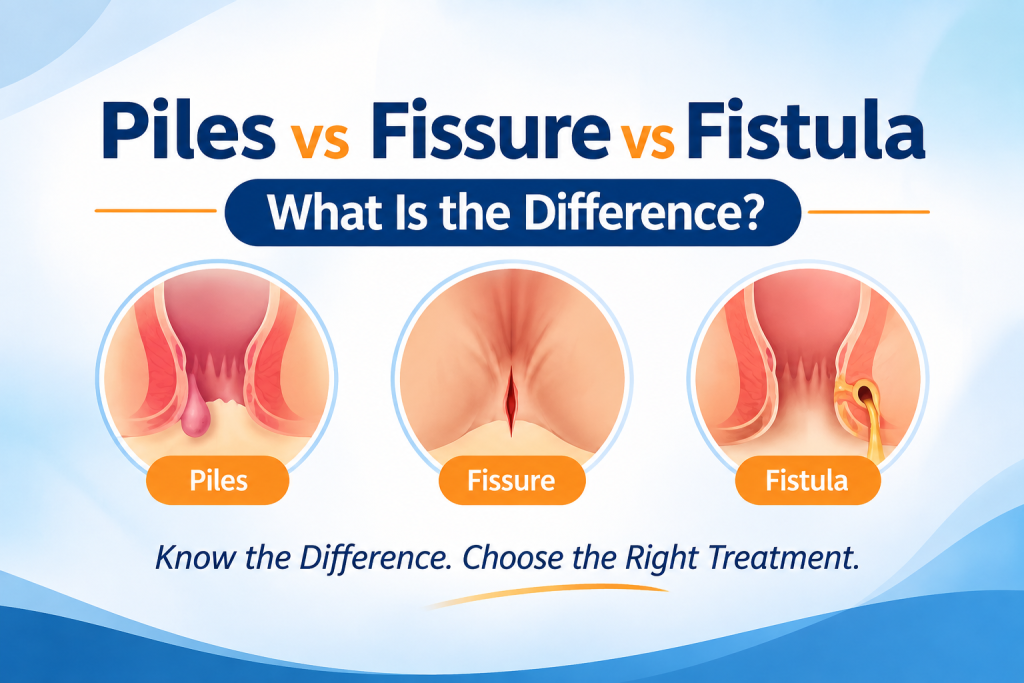
What Are Piles, Fissures and Fistulas?
Piles, fissures, and fistulas are common conditions affecting the anal and rectal region. Although some symptoms may appear similar, their causes and medical characteristics are different.
What Are Piles (Hemorrhoids)?
Piles, medically known as hemorrhoids, are swollen blood vessels and supporting tissues inside or around the anus and lower rectum. They commonly develop due to increased pressure in the anal region, which may be associated with constipation, excessive straining, or prolonged sitting.
Common symptoms of piles include:
- Bright red bleeding during bowel movements.
- Itching or irritation around the anus.
- Swelling or lumps near the anal opening.
- Discomfort while sitting.
- Protrusion of internal hemorrhoids in some cases.
Piles can be internal or external depending on their location. Their severity varies, and treatment depends on the symptoms and grade of hemorrhoids.
What Is an Anal Fissure?
An anal fissure is a small tear or cut in the thin lining of the anal canal. It commonly develops when hard stools pass through the anal opening, causing injury to the delicate tissue.
People with anal fissures often experience sharp pain during bowel movements, followed by a burning sensation that may continue for some time.
Common symptoms include:
- Sharp pain while passing stools.
- Burning sensation after bowel movements.
- Small amounts of bright red blood.
- Discomfort during and after passing stools.
- Muscle spasms around the anal opening.
Anal fissures may be acute or chronic. Acute fissures are relatively recent tears, while chronic fissures persist for a longer period and may require additional medical treatment.
What Is Bhagandar (Anal Fistula)?
Bhagandar, medically known as Fistula-in-Ano, is an abnormal tunnel that develops between the anal canal or rectum and the surrounding skin near the anus.
It commonly develops after an anal abscess or infection. When an infected area drains but does not heal completely, a small tract may remain and develop into a fistula.
Common symptoms of Bhagandar include:
- Continuous or repeated pus discharge near the anus.
- Swelling around the anal region.
- Recurrent abscesses or boils.
- Pain and irritation near the anal opening.
- Foul-smelling discharge.
- Fever when an associated infection or abscess develops.
Unlike many uncomplicated fissures and piles, an anal fistula usually does not heal on its own and often requires surgical treatment.
What Is the Difference Between Piles, Fissure and Fistula?
The main difference is the type of problem affecting the anal region. Piles involve swollen hemorrhoidal tissue, fissures involve a tear in the anal lining, and fistulas involve an abnormal tunnel connecting the anal canal or rectum to the surrounding skin.
The following comparison explains their differences:
| Comparison | Piles | Fissure | Fistula |
|---|---|---|---|
| Medical name | Hemorrhoids | Anal fissure | Fistula-in-Ano |
| What is it? | Swollen hemorrhoidal tissue | Small tear in the anal lining | Abnormal tunnel near the anus |
| Main cause | Increased pressure in anal tissues | Hard stools or repeated irritation | Often develops after an anal abscess |
| Common symptom | Bleeding and swelling | Sharp pain during bowel movements | Pus or fluid discharge |
| Pain | May or may not be painful | Often causes sharp pain | May cause persistent pain |
| Discharge | Usually no pus | Usually no pus | Pus or blood may discharge |
| Treatment | Lifestyle changes, medicines or procedures | Medicines, lifestyle changes or surgery | Usually requires a surgical procedure |
Although the symptoms may overlap, a proper examination is necessary to identify the exact condition.
How Can You Identify Whether You Have Piles, Fissure or Fistula?
Recognising the symptoms can help you understand when medical evaluation is needed. However, symptoms alone cannot confirm a diagnosis.
Symptoms of Piles
Piles commonly cause bleeding, itching, swelling, and discomfort around the anus. Internal piles may cause painless bleeding, while external piles can become painful, especially when a blood clot develops.
You may notice:
- Bright red blood after passing stools.
- A lump near the anal opening.
- Itching or irritation.
- Discomfort while sitting.
- Tissue protruding during bowel movements.
Symptoms of Anal Fissure
An anal fissure generally causes sharp pain during bowel movements. The pain may continue even after passing stools because of irritation and muscle spasms.
You may experience:
- Pain while passing hard stools.
- Burning sensation after bowel movements.
- Bright red blood on toilet paper.
- A visible small tear near the anal opening.
- Discomfort that makes bowel movements difficult.
Symptoms of Anal Fistula (Bhagandar)
An anal fistula commonly causes repeated discharge from a small opening near the anus. The discharge may contain pus or blood and can be accompanied by swelling and discomfort.
Common warning signs include:
- Repeated pus discharge.
- Swelling near the anal opening.
- Recurrent painful boils.
- Persistent irritation.
- Foul-smelling fluid discharge.
- Fever and increasing pain if an abscess develops.
What Causes Piles, Fissures and Fistulas?
Each condition has different causes, although some contributing factors may overlap.
Common Causes of Piles
Some common factors that contribute to piles include:
- Chronic constipation.
- Excessive straining during bowel movements.
- Low-fiber dietary habits.
- Prolonged sitting.
- Pregnancy and increased abdominal pressure.
- Age-related weakening of supporting tissues.
Common Causes of Anal Fissures
Anal fissures usually develop due to injury or irritation of the anal lining.
Common causes include:
- Passing hard or dry stools.
- Chronic constipation.
- Frequent diarrhoea.
- Excessive straining.
- Inflammatory bowel conditions.
Common Causes of Anal Fistulas
Most anal fistulas develop following an infection in the anal glands, which can lead to an abscess.
Other possible causes include:
- Recurrent anal abscesses.
- Crohn’s disease.
- Certain chronic infections.
- Previous anorectal surgery.
- Inflammatory bowel conditions.
How Are Piles, Fissures and Fistulas Diagnosed?
Proper diagnosis is important because the treatment for each condition is different. A surgeon usually begins by understanding the patient’s symptoms, medical history, and previous treatment.
Physical Examination
The doctor may perform an examination to identify swelling, tears, external openings, or other abnormalities around the anal region.
Depending on the patient’s condition, the examination may include:
- Medical history assessment.
- External anal examination.
- Digital rectal examination when appropriate.
- Anoscopy or proctoscopy.
Additional Tests for Anal Fistula
In suspected complex or recurrent fistula cases, additional investigations may be recommended.
These can include:
- MRI pelvis.
- Endoanal ultrasound.
- Examination under anaesthesia.
These tests help identify the location, length, and complexity of the fistula tract so that an appropriate treatment plan can be selected.
What Are the Treatment Options for Piles, Fissures and Fistulas?
The treatment depends on the type of condition, severity of symptoms, and overall health of the patient. Not every patient requires surgery, and conservative treatment may be sufficient in some cases.
Treatment Options for Piles
Mild piles may improve with dietary changes, increased fiber intake, adequate hydration, and medicines prescribed by a doctor.
Depending on the grade and severity, treatment options may include:
- Dietary and lifestyle modifications.
- Medicines for symptom management.
- Rubber band ligation for suitable internal hemorrhoids.
- Laser treatment for selected patients.
- Conventional surgical procedures for advanced cases.
Laser Treatment for Piles: Laser procedures use controlled laser energy to treat selected hemorrhoidal tissue. The procedure may help reduce postoperative discomfort and support recovery in suitable patients. However, the best treatment depends on the grade and type of hemorrhoids.
Treatment Options for Anal Fissures
Treatment for an anal fissure generally focuses on reducing pain, improving bowel movements, and allowing the tear to heal.
Common treatment options include:
- High-fiber diet.
- Adequate water intake.
- Stool softeners when prescribed.
- Warm sitz baths.
- Prescription ointments to relax the anal muscles.
- Surgical treatment for selected chronic fissures.
For patients who do not respond to conservative treatment, a surgeon may recommend a suitable procedure. Depending on the condition, fissure surgery in Nashik may involve lateral internal sphincterotomy or other appropriate surgical techniques.
Treatment Options for Bhagandar (Anal Fistula)
An anal fistula usually requires a procedure or surgery because the abnormal tract rarely closes completely on its own.
Depending on its location and complexity, treatment options may include:
- Fistulotomy.
- Laser Treatment for Fistula.
- Seton placement.
- LIFT procedure.
- Other sphincter-preserving surgical techniques.
Laser Treatment for Fistula is a minimally invasive approach used in selected patients. It involves using laser energy within the fistula tract to help close the abnormal passage while aiming to preserve the surrounding anal sphincter muscles.
The suitability of laser treatment depends on the fistula’s anatomy and complexity. A detailed evaluation is important before choosing the procedure.
Which Is More Serious: Piles, Fissure or Fistula?
The seriousness of these conditions depends on their severity, symptoms, and associated complications.
- Piles: Mild cases may improve with lifestyle changes, but advanced hemorrhoids can require medical procedures or surgery.
- Fissure: Acute fissures often heal with appropriate treatment, but chronic fissures may cause persistent pain and require surgical management.
- Fistula: An untreated fistula may cause repeated infections, abscess formation, and ongoing discharge. Surgical treatment is commonly required.
None of these conditions should be ignored when symptoms persist. Early diagnosis helps prevent complications and supports appropriate treatment.
Can Piles, Fissure and Fistula Occur Together?
Since these conditions can produce similar symptoms, self-diagnosis may lead to incorrect treatment. Consulting an experienced Piles doctor, General Surgeon, or Laparoscopic Surgeon can help patients understand their condition and receive appropriate medical guidance. The surgeon will evaluate the symptoms and recommend a suitable treatment approach based on the diagnosis.
How Can You Prevent Piles, Fissures and Fistulas?
Healthy bowel habits can help reduce the risk of piles and fissures. Although lifestyle changes cannot guarantee the prevention of fistulas, early treatment of anal infections and abscesses is important.
Eat a Fiber-Rich Diet
Include fruits, vegetables, whole grains, and other fiber-rich foods in your daily meals. Fiber helps maintain softer stools and supports regular bowel movements.
Drink Enough Water
Adequate hydration helps maintain normal bowel movements and may reduce the chances of constipation.
Avoid Excessive Straining
Do not force bowel movements or spend unnecessarily long periods sitting on the toilet.
Maintain Regular Physical Activity
Walking and other suitable physical activities can support digestive health and bowel regularity.
Seek Early Medical Attention
Do not ignore persistent anal pain, bleeding, swelling, or pus discharge. Early evaluation of an anal abscess may help prevent complications.
When Should You Consult a General Surgeon?
You should seek medical evaluation if you experience any of the following symptoms:
- Repeated bleeding during bowel movements.
- Severe pain while passing stools.
- Persistent swelling around the anus.
- Repeated pus or fluid discharge.
- Recurrent boils or abscesses.
- Symptoms that do not improve with medication.
- Fever accompanied by anal pain or swelling.
Heavy rectal bleeding, dizziness, fever with increasing pain, or rapidly worsening swelling requires urgent medical attention.
Remember that rectal bleeding is not always caused by piles. Other digestive and anorectal conditions may also produce similar symptoms, making proper diagnosis essential.
Conclusion
Piles, fissures, and fistulas are different anorectal conditions, even though they may cause similar symptoms such as pain, bleeding, swelling, and discomfort. Understanding their differences is important for choosing the correct treatment and avoiding delays in medical care. If you are experiencing persistent anal pain, bleeding, or discharge and considering Laser Treatment for Piles in Nashik, consult Dr. Sachin Deore at Saru Hospital for proper diagnosis and guidance on suitable treatment options. Timely medical attention and an appropriate treatment plan can help improve recovery and long-term comfort.
Frequently Asked Questions
How Do I Know Whether I Have Piles or an Anal Fissure?
Piles commonly cause bleeding, itching, swelling, or a lump around the anus. An anal fissure generally causes sharp pain during and after bowel movements, sometimes with bright red bleeding. A medical examination is necessary to confirm the condition.
What Is the Main Difference Between Bhagandar and Piles?
Bhagandar is an abnormal tunnel connecting the anal canal or rectum to the surrounding skin, commonly associated with an earlier infection or abscess. Piles are swollen hemorrhoidal tissues. Bhagandar often causes pus discharge, while piles commonly cause bleeding, itching, or swelling.
Can Piles, Fissure and Fistula Cause Bleeding?
Yes. All three conditions can sometimes cause bleeding, but the pattern and associated symptoms may differ. Piles often cause bright red bleeding, fissures may bleed with painful bowel movements, and fistulas may cause blood-stained discharge. A doctor should evaluate unexplained or repeated bleeding.
Which Condition Causes Pus Discharge Near the Anus?
Pus discharge near the anus is commonly associated with an anal fistula or an abscess. Repeated discharge from a small opening may indicate an abnormal fistula tract and should be evaluated by a surgeon.
Can Anal Fissures and Piles Heal Without Surgery?
Yes. Many mild cases of piles and acute anal fissures can improve with dietary changes, adequate hydration, medicines, and healthy bowel habits. However, advanced piles and chronic fissures may require a procedure or surgery.